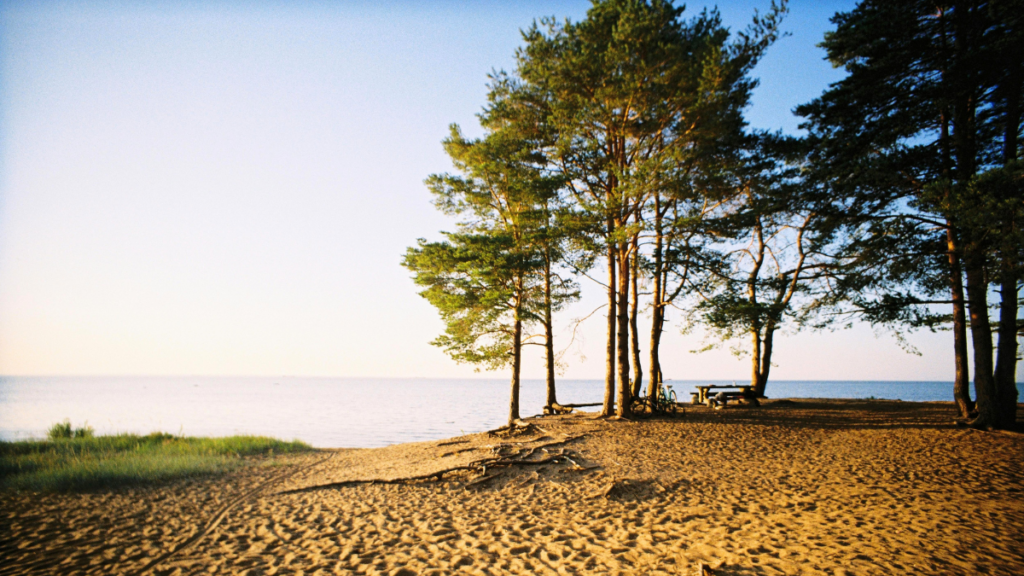
Looking Beyond Today’s Forest
Restoring a forest means thinking far beyond the next few years, or even the next few decades. Every tree planted today has the potential to shape Discovery Park’s landscape for centuries, influencing wildlife habitat, biodiversity, and the character of Seattle’s largest public park.
In this opinion piece, Friends of Discovery Park President, Philip Vogelzang, reflects on one question that restoration volunteers occasionally ask: Are shore pine the right tree to plant at Discovery Park?
Why I Plant Trees for the Next Millennium, Not This One
Use of Pinus contorta in the restoration of Discovery Park’s forests…
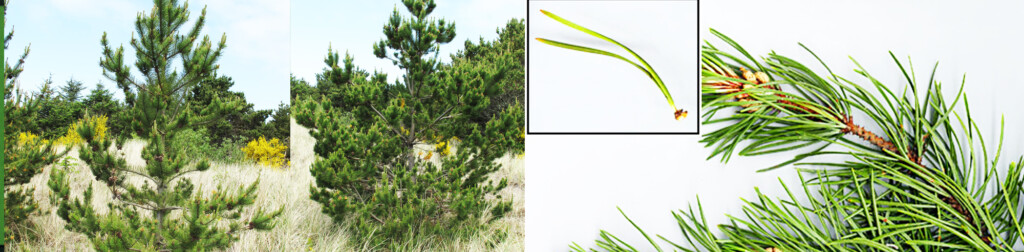
Pinus contorta var. contorta, commonly known as shore pine, is described in Plants of the Pacific Northwest Coast by Pojar and MacKinnon (1994) as:
“Short, to 20 m tall, often with crooked trunk and irregular, pillowy crown…”
Am I the only one who’s noticed this? All over Discovery Park are planted hundreds and hundreds of shore pine in an effort to “reforest” or “restore” the park.
This certainly is not the hemlock-, spruce-, and Douglas-fir-dominated forest that historically existed here. So why would we plant it?
The idea behind planting trees in the park is to improve wildlife habitat and gradually restore a forest that resembles the ecosystems that once thrived here. Larger, older conifers generally provide more complex habitat for birds and other wildlife, which has always been my goal.
The single biggest reason I enjoy planting trees is knowing they’ll have an impact far beyond my lifetime. My idea of impact is planting an organism that may live for 500 to 700 years, storing carbon, cooling the city, producing oxygen, and supporting countless generations of wildlife. Sitka spruce, for example, can live well over 700 years.
So if you’re investing the time, energy, and resources to plant a tree in Discovery Park, why not choose one that has the potential to become part of an old-growth forest?
Fellow Friends of Discovery Park Board Member, Tom Palm, and I learned this lesson more than 20 years ago after planting numerous shore pines at our North Slope restoration site. Many failed to thrive, drying out or falling over. Based on that experience, I believe they simply aren’t the best long-term choice for this location.
I’d be happy to take anyone on a walk through the site, just north of the Jackson Viewpoint and flagpole. Seeing the results firsthand tells the story better than words ever could.
— Philip Vogelzang
President, Friends of Discovery Park
Restoration Is About the Future
Forest restoration often involves thoughtful discussions about which species are best suited for specific habitats. As Discovery Park continues to evolve, volunteers, ecologists, and restoration practitioners all share the same goal: creating healthy, resilient forests that will benefit wildlife and future generations.
Interested in exploring the North Slope and other restoration areas? Visit our Maps & Trails page before your next walk through the park.
If you’d like to help restore Discovery Park’s forests, learn more about upcoming stewardship events on our Volunteer page.
Stay informed about restoration projects, volunteer opportunities, and Discovery Park news by signing up for our newsletter.