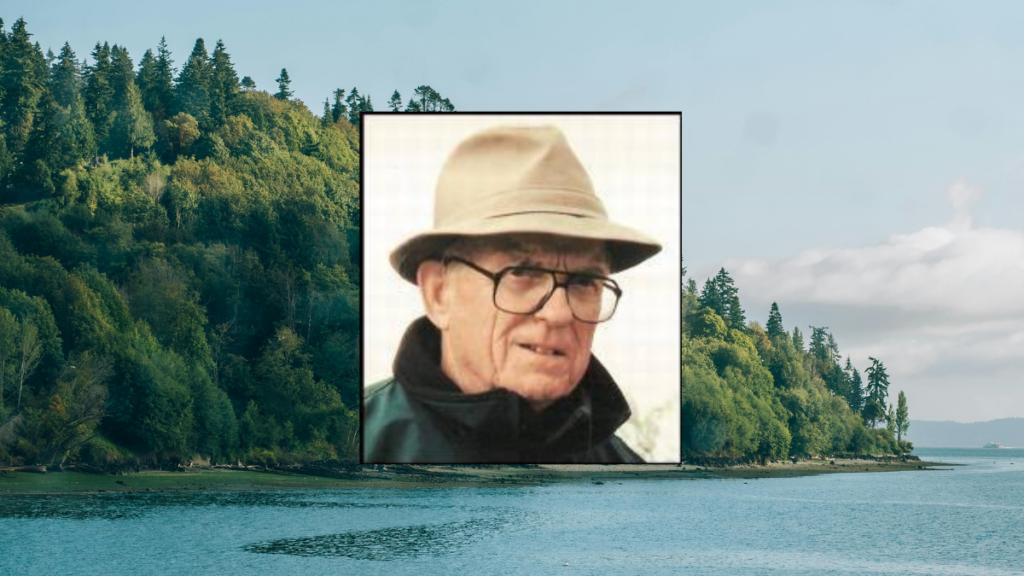
Robert “Bob” Kildall (July 24, 1920 – June 16, 2014) was a founding member of the Friends of Fort Lawton Park, the precursor to Friends of Discovery Park. Bob served as chairman of the Board of Park Commissioners from 1975 to 1976 and was the first president of Friends of Discovery Park.
His 1994 letter to the Seattle Times, “Let Discovery Park Remain a Place of Natural Solitude,” offers a window into the concerns of early Discovery Park advocates, and a reminder that the responsibility to protect the park’s open, natural character has been passed from one generation to the next.
Let Discovery Park Remain a Place of Natural Solitude
By Robert Kildall
December 25, 1994 – Letter to the Seattle Times
Hundreds of years ago, Spinoza wrote that “Nature abhors a vacuum.” More than 25 years ago, a vacuum was created when the military left most of Fort Lawton. Instead of buildings and roadways, noise and pollution, the land could then become a magnificent city park.
The politicians promised Seattle and Magnolia citizens that Discovery Park would be a place of solitude for the enjoyment of the beauties and wonders of nature. Nature, in its powerful way, filled the vacuum.
Much of the park has no resemblance to the old fort. Barracks are gone; many roads and other man-made structures are removed. The park reverted to a pastoral setting. Plants took over building sites. The “critters” arrived. Bald eagles, now soaring over the city, call the park their home. They successfully nest in the park. Hundreds of species now support an entire ecosystem.
These natural attributes assured the success of the Discovery Park nature program. The city acknowledged this success by replicating the program in many other parks. None of the programs are as successful as Discovery Park’s program. Last year it was cited as the outstanding outdoor nature program in the state.
More and more citizens discover Discovery Park. It is away from the city turmoil. It has an inestimable value in rejuvenating our minds, relaxing our bodies and replacing the stress of city life through the enjoyment of its creatures, the charm of its wildness and the beauty of its views. No other city park has such natural grandeur. Seattle has no other place left to substitute for it.
But “mankind abhors a vacuum” too. Developers find Discovery Park a perfect site for activities and structures without number. In time, these “concrete proposals” could fill the “vacuum.”
For the sake of Sand Point and the Seattle Commons, should this park take the traffic, noise and pollution of a new joint Army/Navy Reserve building? Is the park beach the only place in King County where a second expansion of Metro’s treatment of sewage can take place? Should the Indians’ “People Lodge” be greatly reduced in size?
Those who care about the park believe there is no question that nature is best able to fill the vacuum at Discovery Park. There is ample room elsewhere in urban settings where man-made encroachments can occur.
What Happened Next?
Kildall’s letter was written at a moment when Discovery Park’s future was already being shaped by competing ideas about how the former Fort Lawton property should be used. More than three decades later, the central question he raised remains familiar: What happens when pressure to put new uses on scarce urban land collides with the value of preserving open, natural space?
Since this letter was written, Discovery Park has continued to evolve. Restoration efforts have transformed former developed areas, volunteers and park staff have helped restore native habitat, and the park has become an increasingly important refuge for wildlife and people alike. At the same time, proposals for new development and changes in how the former Fort Lawton lands are used have continued to generate debate.
That history is part of why Friends of Discovery Park continues to advocate for the park’s natural character and the protections established for its open space. You can learn more about our advocacy work and the history of Discovery Park, including the long effort to transform Fort Lawton into the park we know today.
The debate Kildall described is also directly connected to more recent discussions about the future of Fort Lawton. For additional context, read our Fort Lawton Redevelopment Testimony post.
Stay connected: Sign up for the Friends of Discovery Park newsletter for news, events, advocacy updates, and opportunities to get involved in protecting Discovery Park.