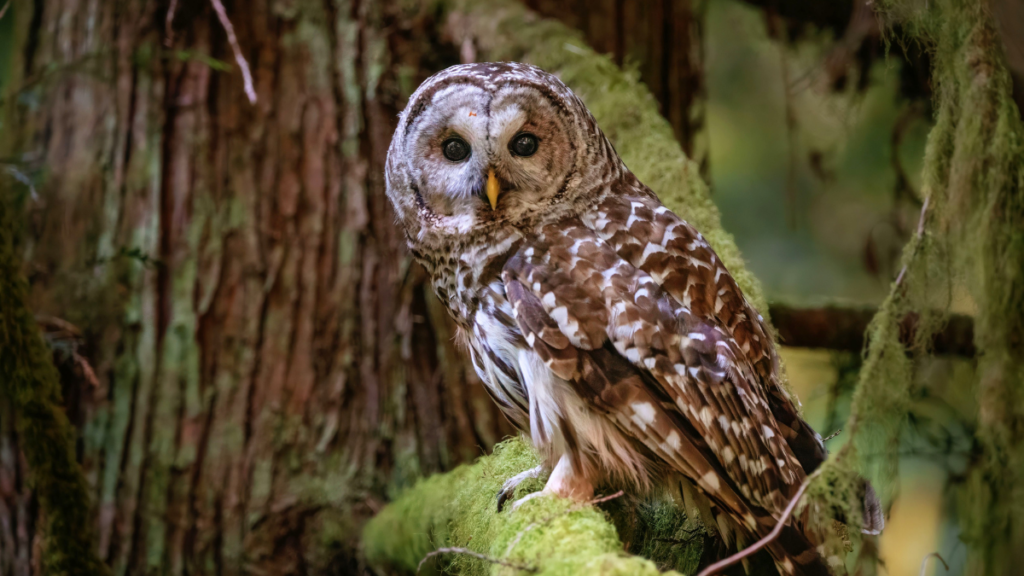
One of the greatest joys of visiting Discovery Park is the chance to encounter wildlife in its natural habitat. From bald eagles and great blue herons to coyotes and owls, the park’s diverse forests, meadows, and shoreline provide essential habitat for many species that thrive within Seattle’s largest green space.
Barred Owls at Discovery Park
In spring 2025, visitors were treated to a special sight: a family of barred owls near Carolina Street (just east of the South Parking Lot) and in the forest along 39th Avenue leading toward the Environmental Learning Center.
One of our dedicated Forest Stewards, Leslie Reed, observed the owls hunting, feeding their young, and quietly moving through the forest canopy — a remarkable reminder of the rich wildlife that depends on Discovery Park’s mature forests.
If you’re fortunate enough to spot one, remember to observe from a respectful distance and avoid disturbing the birds or their nesting habitat.
About Barred Owls
Barred owls (Strix varia) are one of the most recognizable owl species in the Pacific Northwest. Named for the distinctive horizontal bars across their chest and vertical streaks along their belly, these medium-to-large owls are known for their soulful dark eyes and their famous call, often described as sounding like:
“Who cooks for you? Who cooks for you all?”
Unlike many owl species that are active only after dark, barred owls are frequently seen during daylight hours, especially when feeding young or hunting beneath the forest canopy.
They thrive in mature forests with large trees, dense vegetation, and nearby water—all characteristics that make Discovery Park ideal habitat. The park’s wooded ravines, forest edges, and streams support a wide variety of prey, allowing barred owls to live and raise their young within Seattle’s largest park.
Research from Birds Connect Seattle, which analyzed hundreds of barred owl pellets collected across the Seattle area, highlights just how adaptable these birds are. Their diet includes small mammals such as deer mice and voles, along with birds, insects, amphibians, and occasionally crayfish and earthworms. The findings demonstrate that barred owls take advantage of the rich diversity of urban forest ecosystems like Discovery Park, where healthy habitats support an abundance of wildlife.
Tips for Watching Owls Responsibly
If you encounter barred owls during your visit:
- Observe quietly and give them plenty of space.
- Never approach nests or young owls.
- Avoid using recorded owl calls, which can disrupt natural behavior.
- Keep dogs leashed and remain on designated trails.
- Bring binoculars for the best viewing experience.
Responsible wildlife viewing helps ensure these remarkable birds continue to thrive in Discovery Park for years to come.
Watch the Owls on Instagram
One of our recent Instagram posts captured this incredible barred owl family in action.
Explore More Wildlife at Discovery Park
Barred owls are just one of the many species that make Discovery Park such a special place. Throughout the year, visitors may also encounter bald eagles, great blue herons, coyotes, river otters, seals, and hundreds of bird species.
Explore more of the plants and wildlife that call Discovery Park home on our Wildlife page.
Stay up to date on wildlife sightings, restoration projects, volunteer opportunities, and park news by signing up for our newsletter. And make sure you follow FoDP on Instagram for more owl updates!